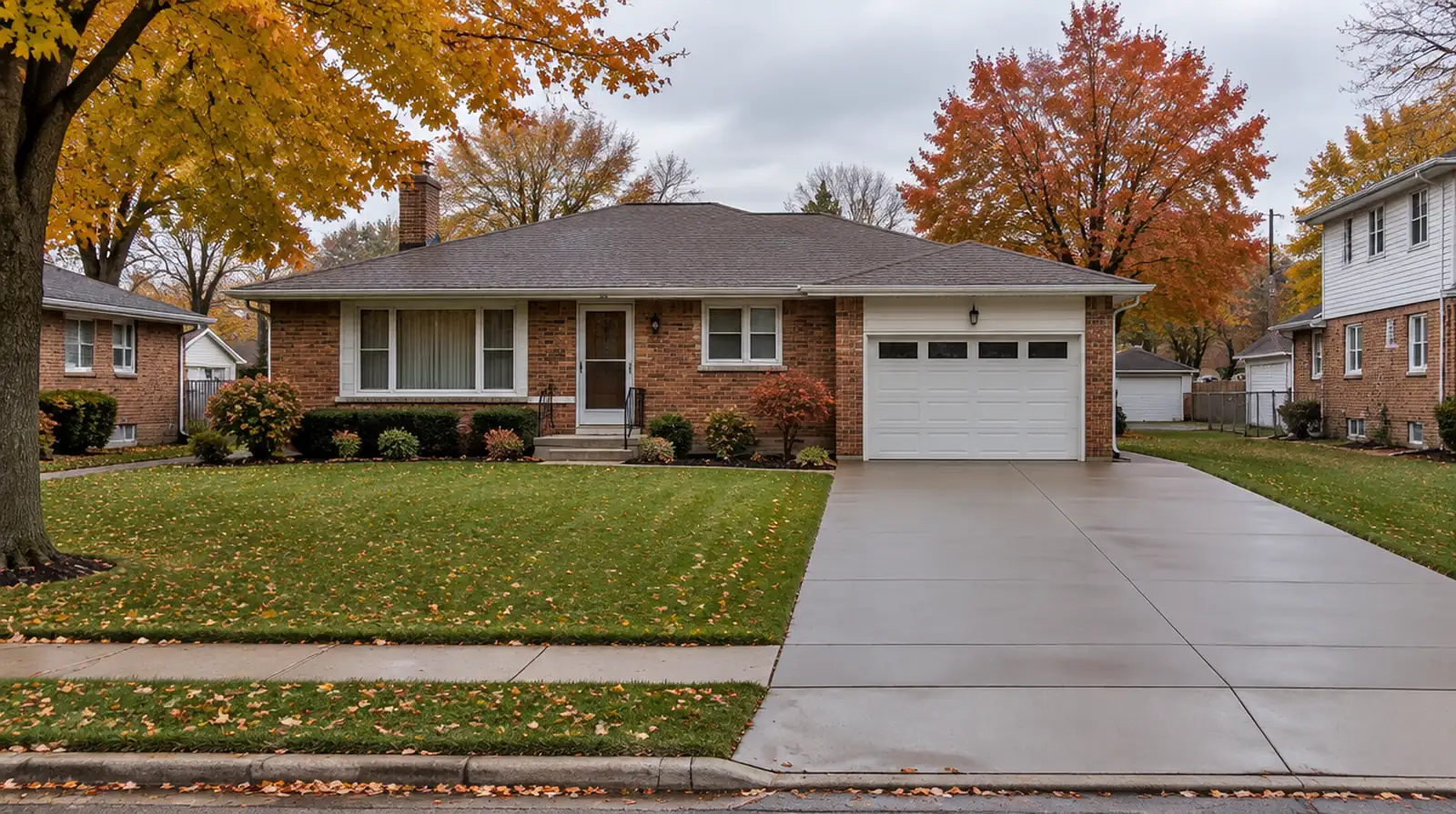
What a driveway faces
A concrete driveway in West Allis gets salt from your own shovel, more salt from the street plow and brine from every car that pulls in. It freezes and thaws through the winter, bakes in the summer sun and holds oil drips year-round. The result is the familiar pattern of scaling near the garage door and the street, cracks running across the slab and stains that never wash out. Over time, a neglected driveway breaks down to the point where replacement is the only answer, and that is expensive.
Coating and sealing a driveway before it gets that far extends its life considerably and keeps it looking clean.
Coating options for driveways
Outdoor surfaces need different products from garage floors. Standard interior epoxy yellows and breaks down in sunlight, and a glossy smooth finish would be dangerously slick on ice. For driveways we use one of three approaches, depending on the condition of the concrete and the look you want.
- Penetrating sealer: soaks in, keeps the natural look and blocks salt and water. Best for sound concrete.
- Textured acrylic or polyurea coating: a thin, UV-stable colored coating with grit for traction, which evens out stains and patched areas.
- Resurfacing plus sealer: a thin cementitious overlay that restores scaled surfaces, followed by a sealer.
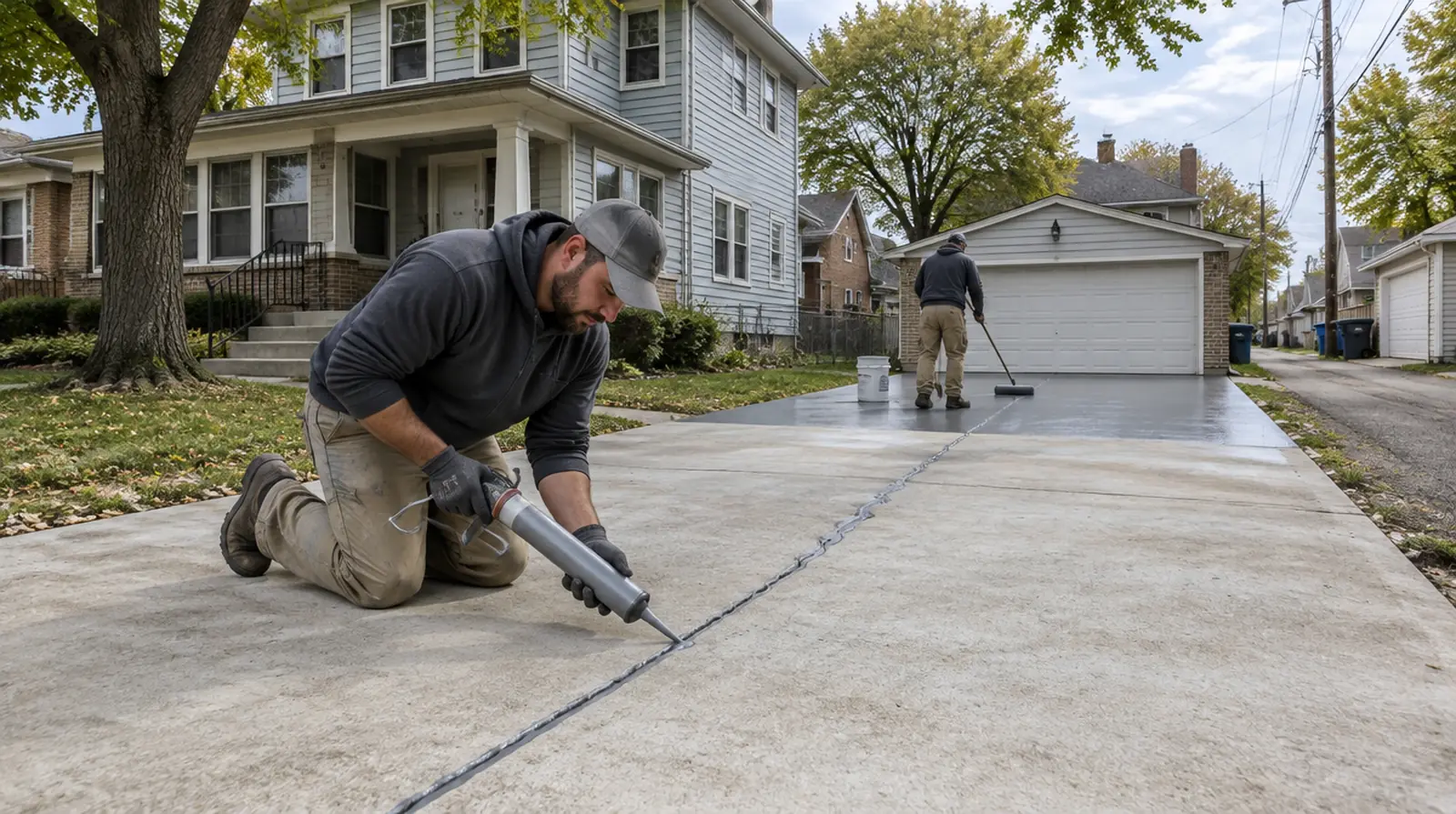
Cracks and joints first
Before anything goes on the surface, we deal with cracks and joints. Water that runs into cracks and joints freezes and pushes the concrete apart, and it can wash out the base underneath. We clean out cracks and control joints, fill them with flexible, UV-resistant sealant and make sure the gap between the driveway and the garage slab is sealed too. That alone can prevent a lot of the heaving and settling that shows up after hard winters.
Aprons and the garage threshold
The first few feet outside the garage door take the worst of the salt, because that is where slush falls off your car and refreezes. Many aprons around town are scaled and pitted while the rest of the driveway is fine. We often coat the apron to match the garage floor inside, using a slip-resistant system that can handle the weather, so the transition from driveway to garage looks clean and is easier to shovel.
Traction comes first
Any coating on a driveway has to be safe to walk on in winter. We always add aggregate to outdoor coatings for grip, and we never use high-gloss finishes outdoors. Even so, any surface can become slick with ice. Coatings make shoveling easier because snow and ice release more readily, but you should still use sand or deicer when needed.
Timing and cure
Driveway work depends on the weather. We schedule it for dry stretches in late spring, summer and early fall, when temperatures are warm enough for the products to cure properly. Most driveways can be walked on the same day and driven on within one to two days. We will let you know where to park while the work is done, usually on the street.
Care
Shovel promptly so snow does not get packed into ice. Use moderate amounts of deicer and avoid ammonium-based products. Wash off oil drips before they soak in. Reseal or recoat every few years, depending on wear. A quick water test tells you when the protection is fading.
Driveway questions
Can you coat an asphalt driveway?
Our coatings are made for concrete. Asphalt needs a different sealcoat product.
Will the coating peel from plows or shovels?
Penetrating sealers cannot peel. Thin coatings can wear at the edges over time and are easy to touch up.
Can you fix a sunken slab?
Slab lifting is a separate trade, and we can point you to it before we coat.
to get a price on your driveway.
Call (414) 441-2926 for a free estimate.