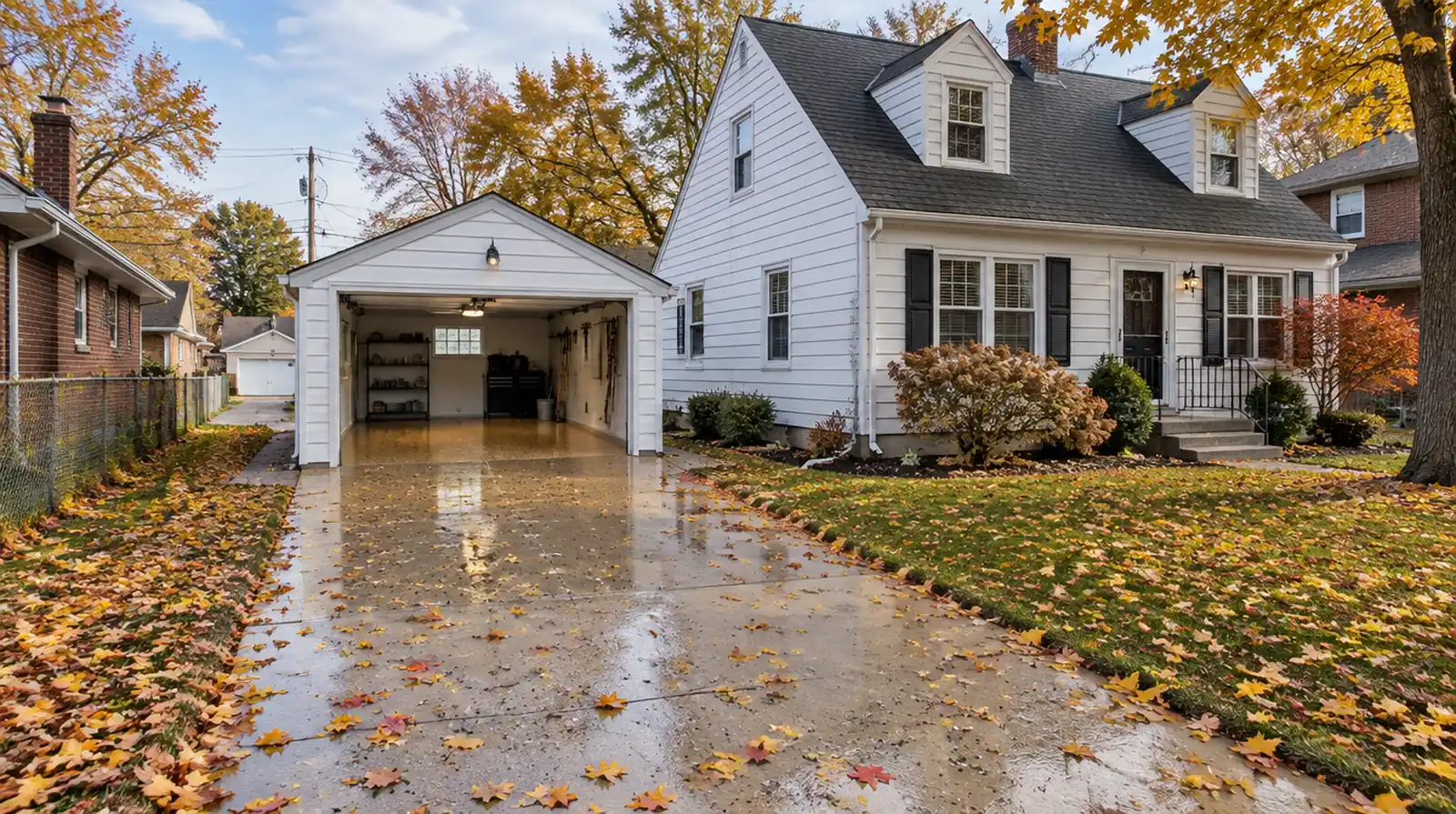
What polyaspartic is
Polyaspartic is a type of aliphatic polyurea. In plain terms, it is a coating that cures much faster than epoxy, stays clear instead of yellowing in sunlight and remains flexible enough to handle temperature swings. It was first used on bridges and industrial equipment, and over the last couple of decades it has become a favorite for residential garages. On many of our jobs we use it as the topcoat over an epoxy base. On others, we use it for the whole system.
Why it suits a Wisconsin garage
Two things set polyaspartic apart for us here. The first is cure temperature. Standard epoxy struggles in a cold garage and can take days to harden when the slab is chilly. Polyaspartic can be applied at much lower temperatures, which lets us keep working well into the fall and, with a little heat, on milder winter days. The second is flexibility. A detached garage can swing from below zero overnight to well above freezing when the sun hits the door, and a slightly flexible coating copes with that movement better than a brittle one.
It also stands up well to salt brine, oil, antifreeze and hot tire pickup, which is when a warm tire softens and lifts a weak coating. That combination makes it a strong fit for the way garages are used here.
One-day installs
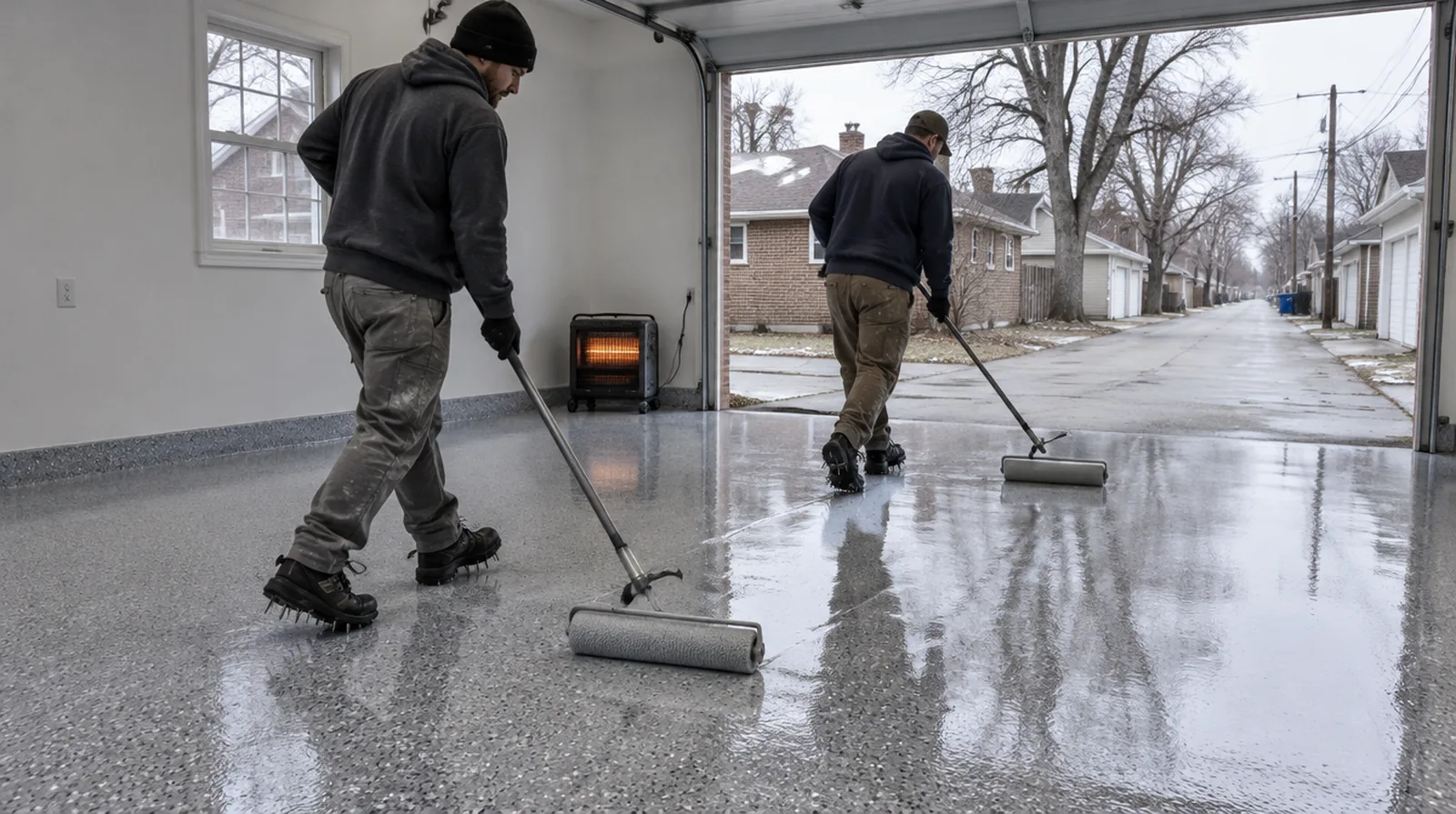
Because polyaspartic cures so fast, we can often grind, repair, base coat, broadcast flake and topcoat in a single day. Foot traffic is usually fine that evening or the next morning, and light vehicles can typically park within twenty-four hours, depending on temperature. For a family that needs the garage back before the next snowfall, that speed matters. We will give you specific timing at the estimate, based on your slab and the forecast.
The fast cure demands skill
The same quick cure that makes polyaspartic convenient also makes it unforgiving. Once it is mixed, the working time is short, sometimes only a few minutes on a warm day. That leaves no room for hesitation. We mix in small batches, work in sections and keep a wet edge so there are no lap marks or bubbles. This is one reason we do not recommend DIY polyaspartic kits. Most of the failed polyaspartic floors we see were rushed or rolled too thick by someone who did not expect it to set so quickly.
Prep is still everything
No coating, however advanced, will stay on a slab that has not been prepared. We diamond grind every polyaspartic floor, just as we do with epoxy, to open the concrete and remove salt, oil and old coatings. Scaled areas are patched and cracks are filled. We test moisture, because high vapor levels can cause bubbling in any fast-cure system. On damp slabs, we put down a moisture-tolerant epoxy primer first and then build the polyaspartic on top.
Finish options
Most of our polyaspartic floors are full-broadcast flake systems, since that combination gives the best mix of durability, traction and dirt hiding. We can also do solid-color polyaspartic, clear coats over existing stained concrete and quartz systems for very high traction. Gloss and satin sheens are both available. Fine aggregate can be added to the final coat for grip when the floor is wet.
Is it worth the price?
Polyaspartic materials cost more than standard epoxy, and the install requires more skill. In exchange you get a faster return to service, more flexibility in scheduling around cold weather and a topcoat that resists yellowing and wear. For most garages, we think it is worth it. For a basement or a heated shop where cure time is not an issue, a well-built epoxy system may serve you just as well for less. We will explain both and let you choose.
Polyaspartic questions
How cold is too cold?
It depends on the product, but polyaspartic can go down far colder than epoxy. We check the slab temperature before every install.
Does it smell?
There is an odor during application that fades quickly as it cures. We ventilate the space while we work.
Can I put it over an old epoxy floor?
Only if the old floor is fully bonded. Otherwise we remove it and start from bare concrete.
to schedule a fast polyaspartic garage floor.
Call (414) 441-2926 for a free estimate.